 Apimanufaktur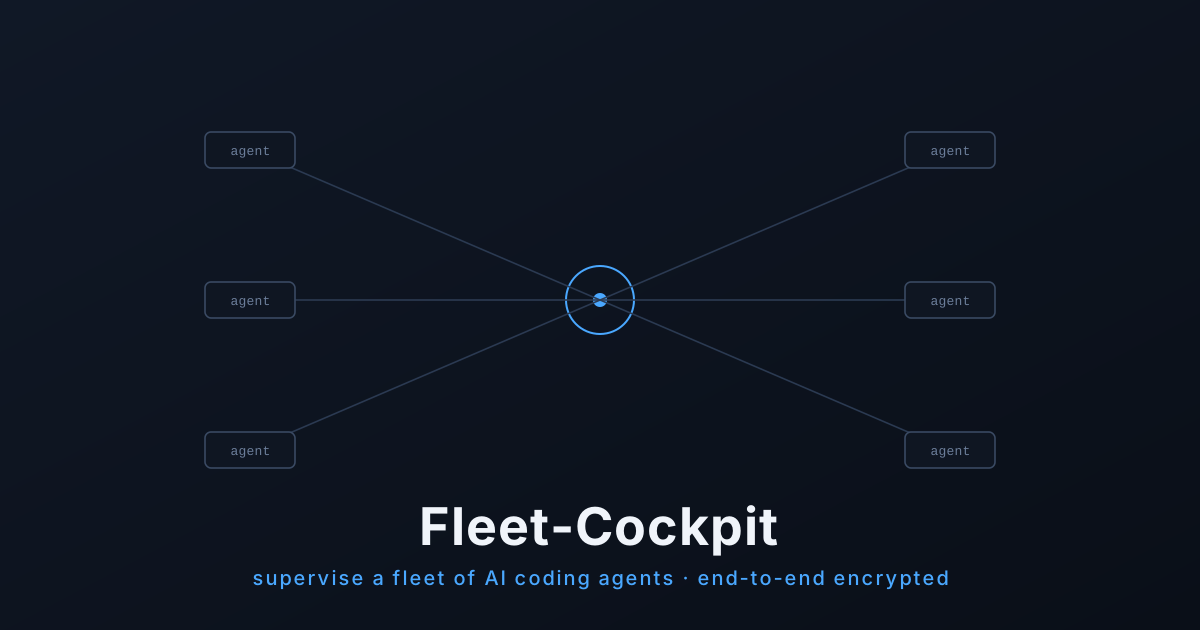
A tool to supervise a whole fleet of AI coding agents across one or more machines — from the desktop and the phone: see live sessions, read output, grant approvals and send commands. Agent-CLI-agnostic, end-to-end encrypted, with a tamper-proof audit log.
The challenge
Running several AI coding agents at once quickly becomes unmanageable — you cannot watch every session, approvals block progress when you are away from the desk, and there is no trustworthy record of who approved what. The brief: supervise a fleet of agents from anywhere, including a phone, without weakening security or losing an audit trail.
The approach
- A clean separation of concerns. An Adapter wraps each agent CLI (so the system is agnostic to which agent you run); a Bridge on each machine makes only outgoing connections to a Relay; the Relay only ever sees ciphertext; and a PWA client on desktop or phone decrypts and displays.
- End-to-end encryption by design. The relay is untrusted infrastructure and never sees plaintext; a documented crypto design and threat-model back this up.
- A tamper-proof audit log of every approval and command, designed to integrate with a separate audit backend.
- Engineering discipline from day one. A TypeScript monorepo, a license allowlist, formatting/typecheck/test gates in CI and git hooks, and architecture decisions captured as numbered ADRs — even though, by deliberate choice, implementation only begins after the product owner signs off the Sprint-0 research and design.
The result
The documented architecture and security model (Apache-2.0) have become a working internal system: relay, bridge and cockpit are running, and the hard problems (trust boundaries, encryption, audit) are solved. Phone pairing and a few cockpit views remain.
What this demonstrates
- Security- and systems-architecture thinking — trust boundaries, E2E encryption, outgoing-only bridges, tamper-proof audit.
- Disciplined engineering process — ADRs, license governance, CI gates — applied before coding.
- Honest scoping — designing before building.
Tech at a glance
TypeScript · npm monorepo · PWA · End-to-end encryption · Relay/Bridge/Adapter architecture · Tamper-proof audit log · ADRs · Apache-2.0