Apimanufaktur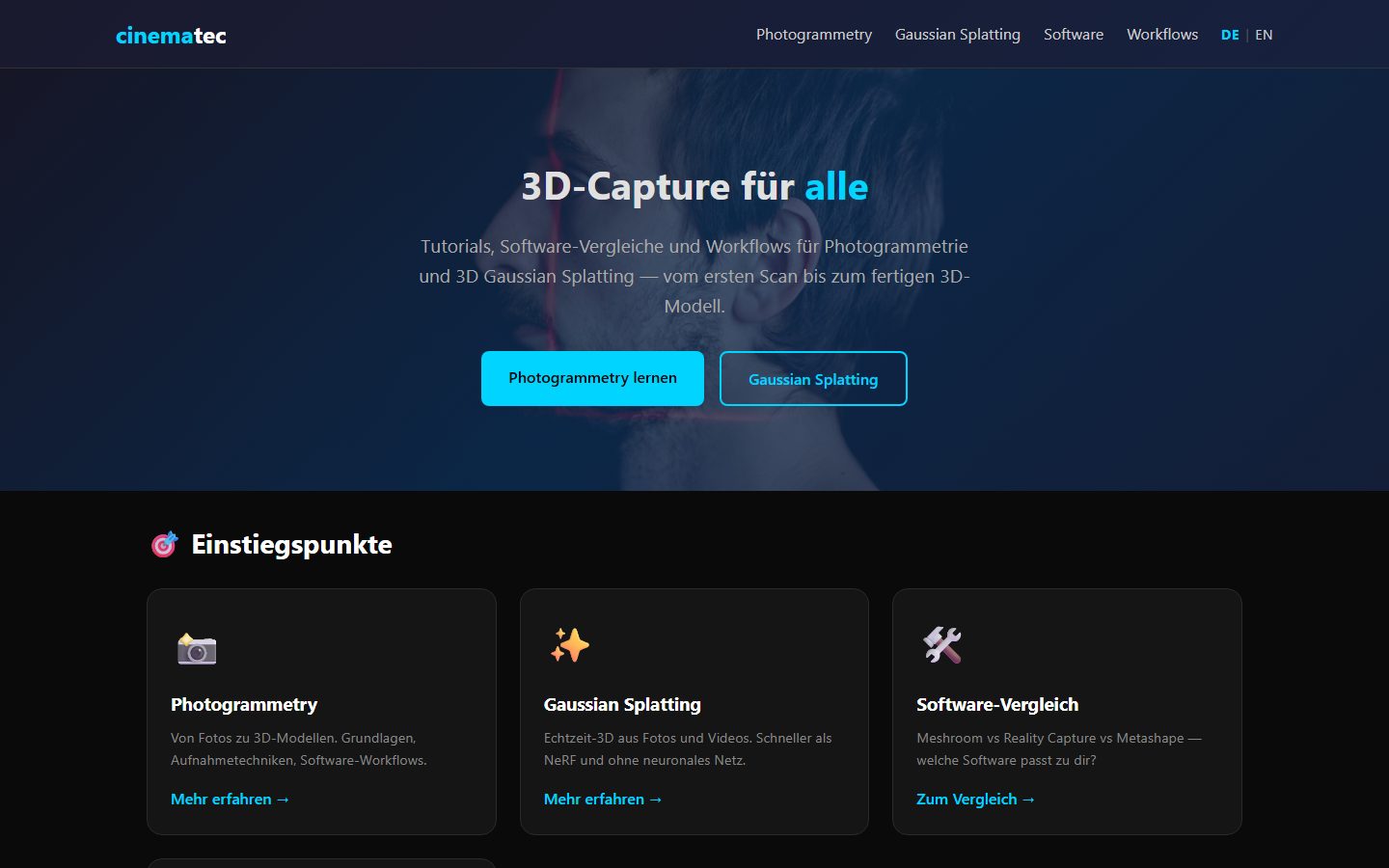
A calm, structured hub that takes someone from their first scan to a finished 3D model — explaining photogrammetry and Gaussian splatting honestly, and helping newcomers choose the right method and the right software.
The challenge
3D-capture is booming, but trustworthy German-language guidance is scarce and scattered; newcomers don’t know whether to reach for photogrammetry or Gaussian splatting, or which software. The goal: one calm, structured hub that takes someone from first scan to finished model.
The approach
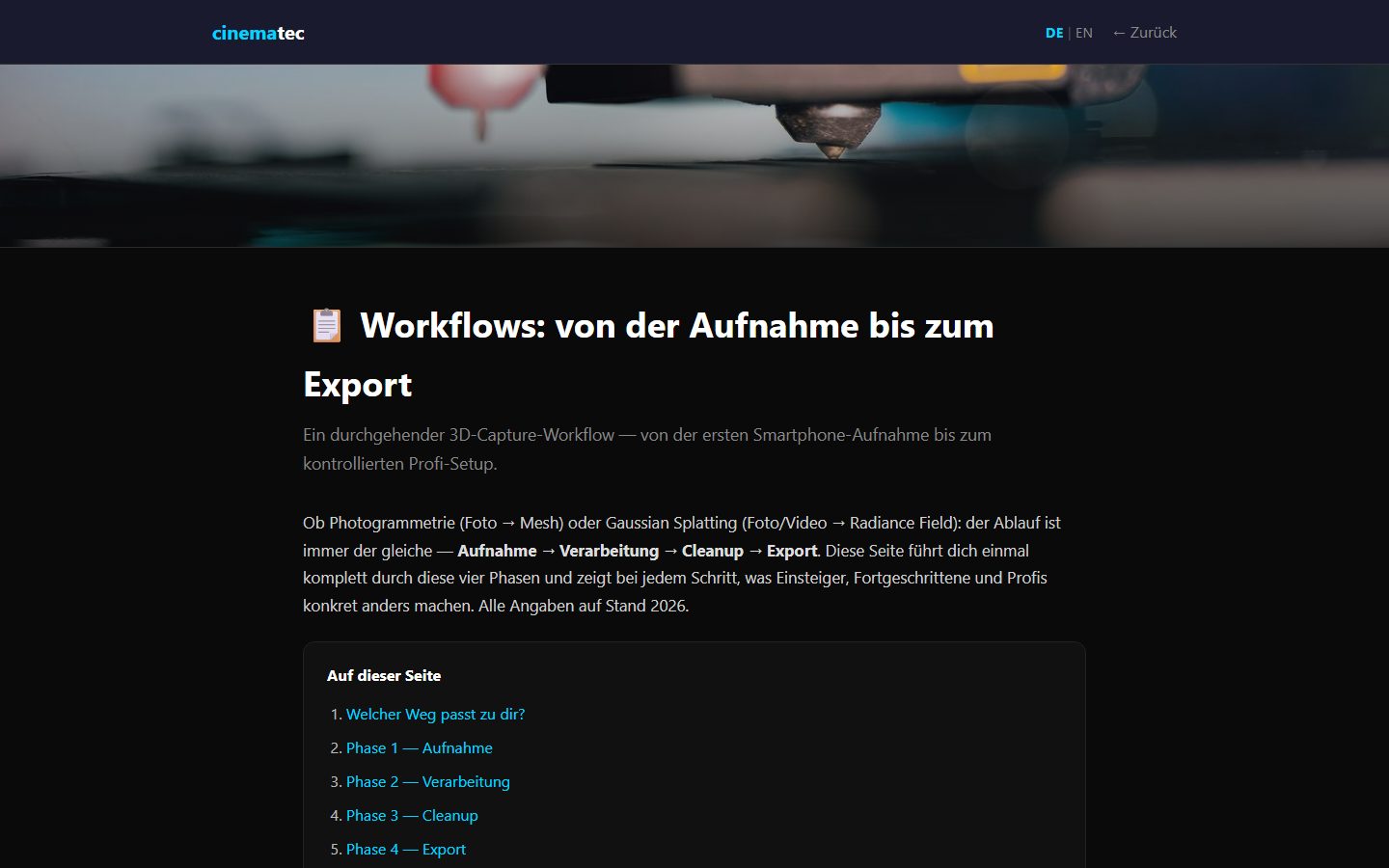
- Four clear pillars. Photogrammetry, 3D Gaussian Splatting, a Software comparison and end-to-end Workflows — plus step-by-step tutorials that walk through each stage.
- An honest explanation of the two competing methods. Classic textured mesh versus splat representation, and when to use which — so readers understand the trade-offs instead of picking blindly.
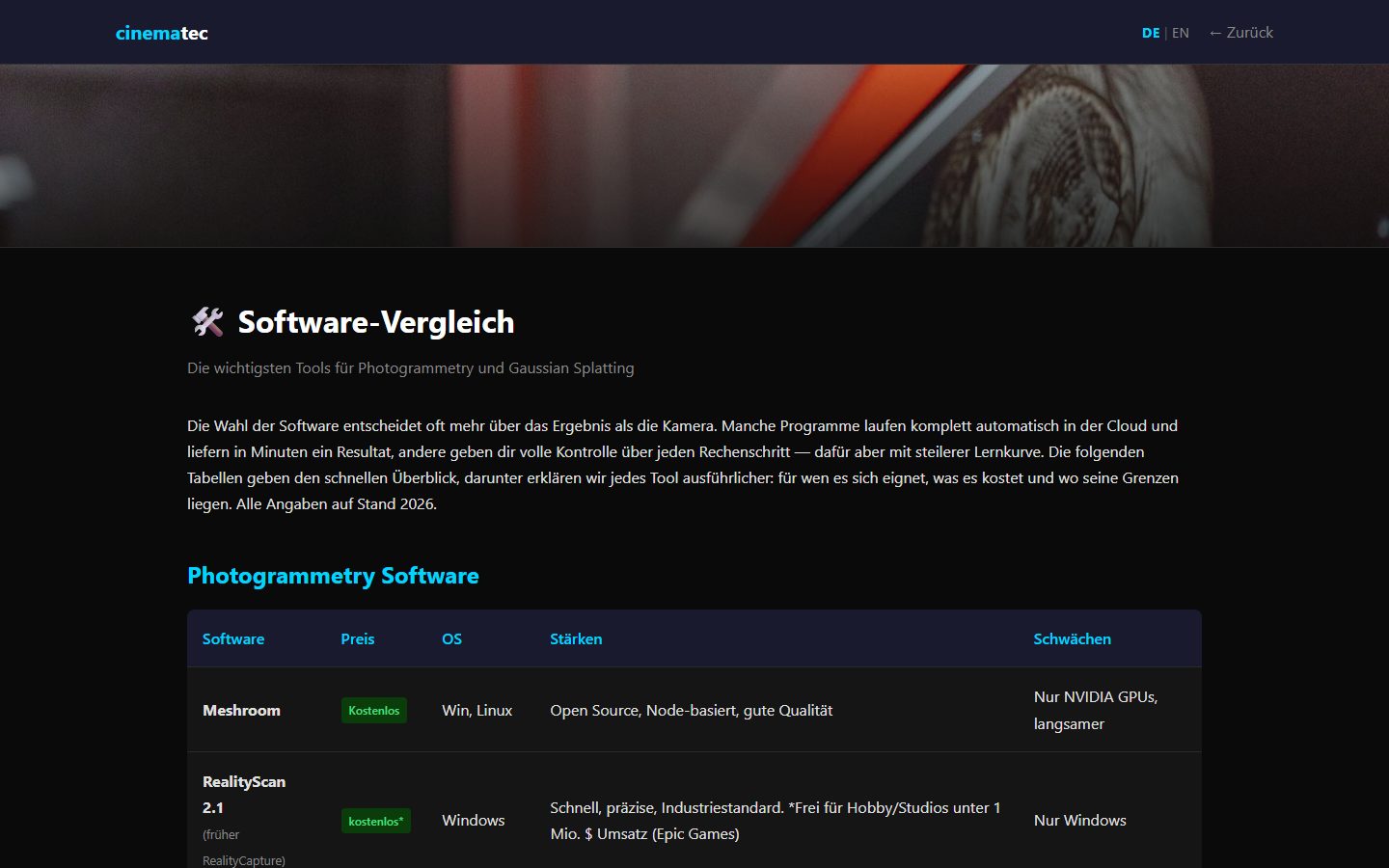
- A grounded software comparison. Real tools rather than marketing lists — RealityCapture, Metashape, the free Meshroom and Postshot — with the strengths and costs spelled out.
- Built for discovery. Structured data (Schema.org JSON-LD, FAQ) and an
llms.txtso both Google and AI assistants can surface the content. - Fast and bilingual. A fast static site with clean URLs on Vercel, fully bilingual DE/EN.
The result
- A coherent, fast, public hub that reads calmly and is genuinely useful from beginner to pro.
- Indexable and answer-engine-ready — structured for both search and AI assistants.
- A single, maintainable resource that replaces scattered, jargon-heavy tutorials.
What this demonstrates
- Content architecture for a technical niche — structure that scales instead of a pile of articles.
- Turning a confusing, jargon-heavy field into an accessible resource.
- Modern SEO/GEO: structured data and bilingual hreflang.
- Full ownership from design to deployment.
Tech at a glance
Static HTML/CSS · Clean URLs · Vercel · Schema.org JSON-LD · llms.txt · Bilingual DE/EN · Responsive